The Secret to Growing an Auto Repair Business Isn't What You Think
I've been in the automotive industry since I was about 15 years old. I started working at a mechanic's shop in Greece, eventually moved to the United States, and spent years working in gas stations and repair shops before opening my own business. And I'll tell you, the way I looked at this business back then compared to the way I look at it today is completely different.
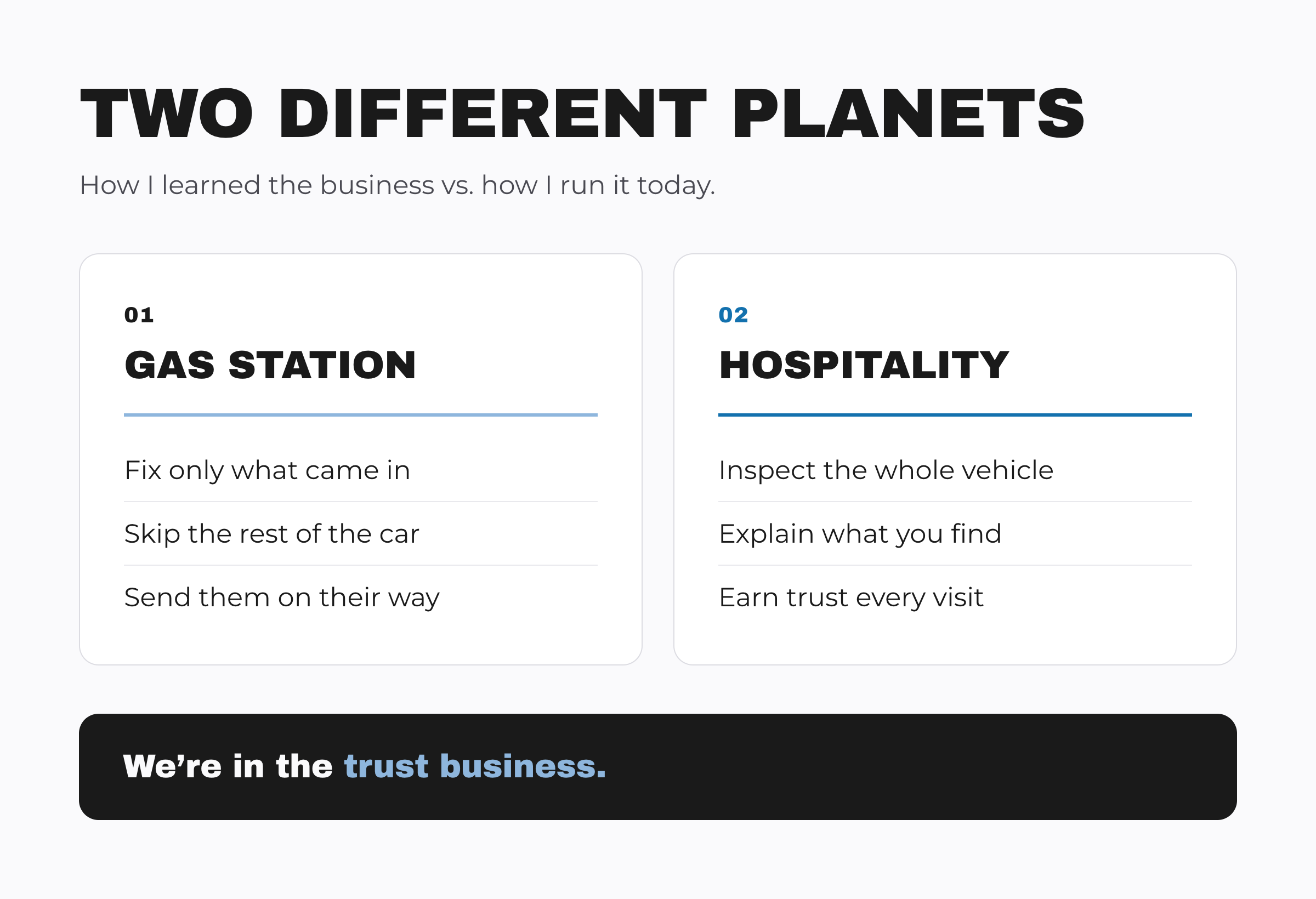
When I worked at a gas station, if somebody brought their car in for brakes, we simply fixed the brakes. We put the wheels back on and sent the customer on their way. We didn't inspect the rest of the vehicle. We didn't spend much time explaining things. We just did the work. That's how I learned the business.
But when I started working with my mentor, Todd Hayes, he introduced me to a completely different way of thinking. He was teaching me the kind of service you would expect at a Four Seasons hotel or a high-end retail store like Neiman Marcus. And here I was, coming from a gas station. We were living on two different planets!
It took me a long time to understand what he was teaching. I fought him on almost everything. I challenged every little thing and tried to change the concept. But eventually, I started listening, and that's when things really began to change.
What I came to understand is that we're not just in the auto repair business. We're in the trust business. And everything we do, from the way we inspect vehicles to the way we communicate with customers, has to reflect that.
How Customer Experience Builds Trust in Auto Repair
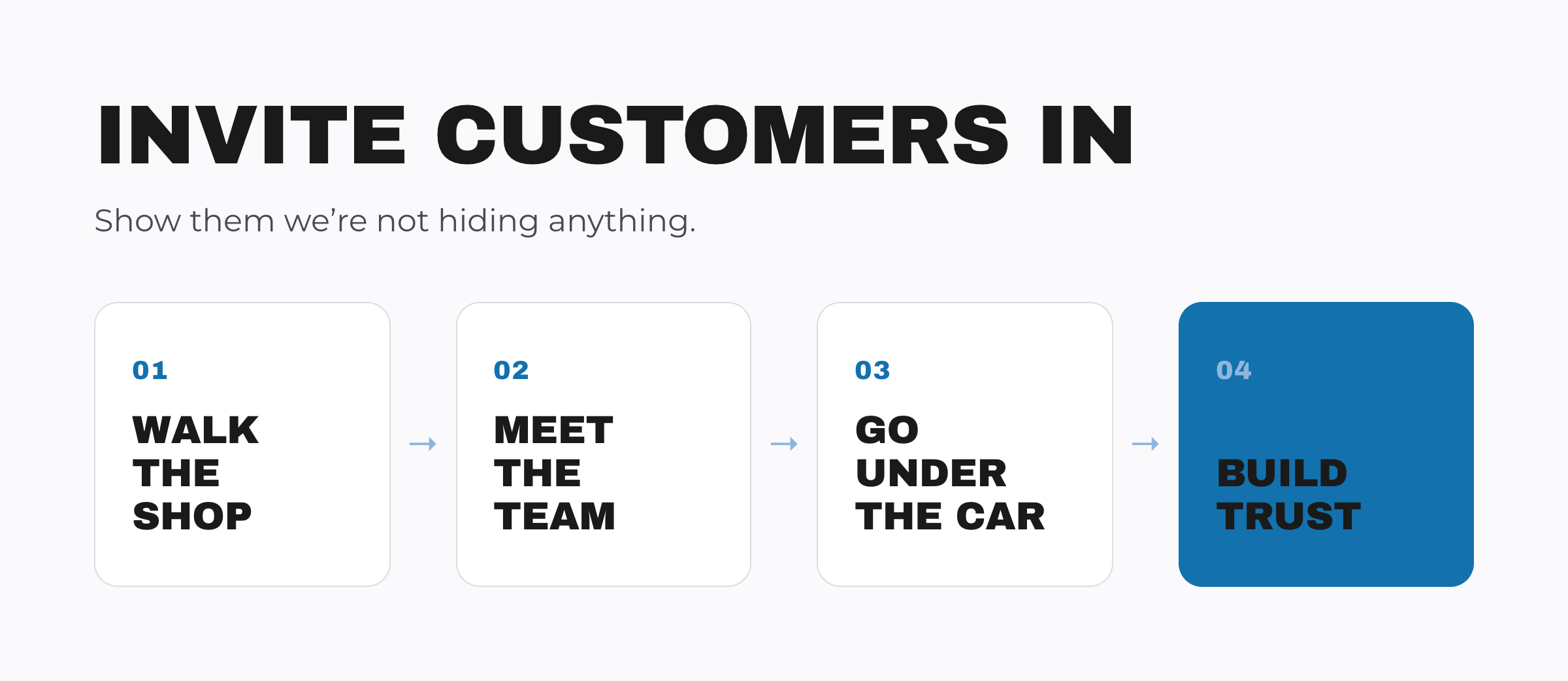
One of the things we do differently in our shops is that we actually invite customers into the repair area. Most auto repair shops have signs telling customers they aren't allowed beyond a certain point. We don't have those signs.
Instead, when a customer comes in, we take them on a little journey through the shop. We introduce them to our technicians, our service advisors, and our managers. Sometimes we'll bring them underneath their own vehicle and show them exactly what's going on.
And I'll tell you, the reaction is incredible.
We work underneath cars every single day. To us, it's nothing special. But to a customer who has never been underneath a car before, it's a completely different experience. They get to see the work we're doing, meet the people taking care of their vehicle, and understand what's happening with their car. Most importantly, they realize we're not hiding anything.
We also approach vehicle inspections differently than most shops. Rather than presenting a customer with a $4,000 or $5,000 estimate all at once, we walk them through their options. We start with the reason they brought their vehicle in, then address additional concerns, and finally discuss maintenance items.
This is especially important when a customer doesn't have the money to do everything at once. If they came in for air conditioning but we discover a serious safety concern, we can help them prioritize the safety repair and come back for the air conditioning later.
Our job is to help the customer make the best decision for their situation, not overwhelm them with information.
That's how you build trust.
Why Human Connection Still Matters in an AI-Driven Business
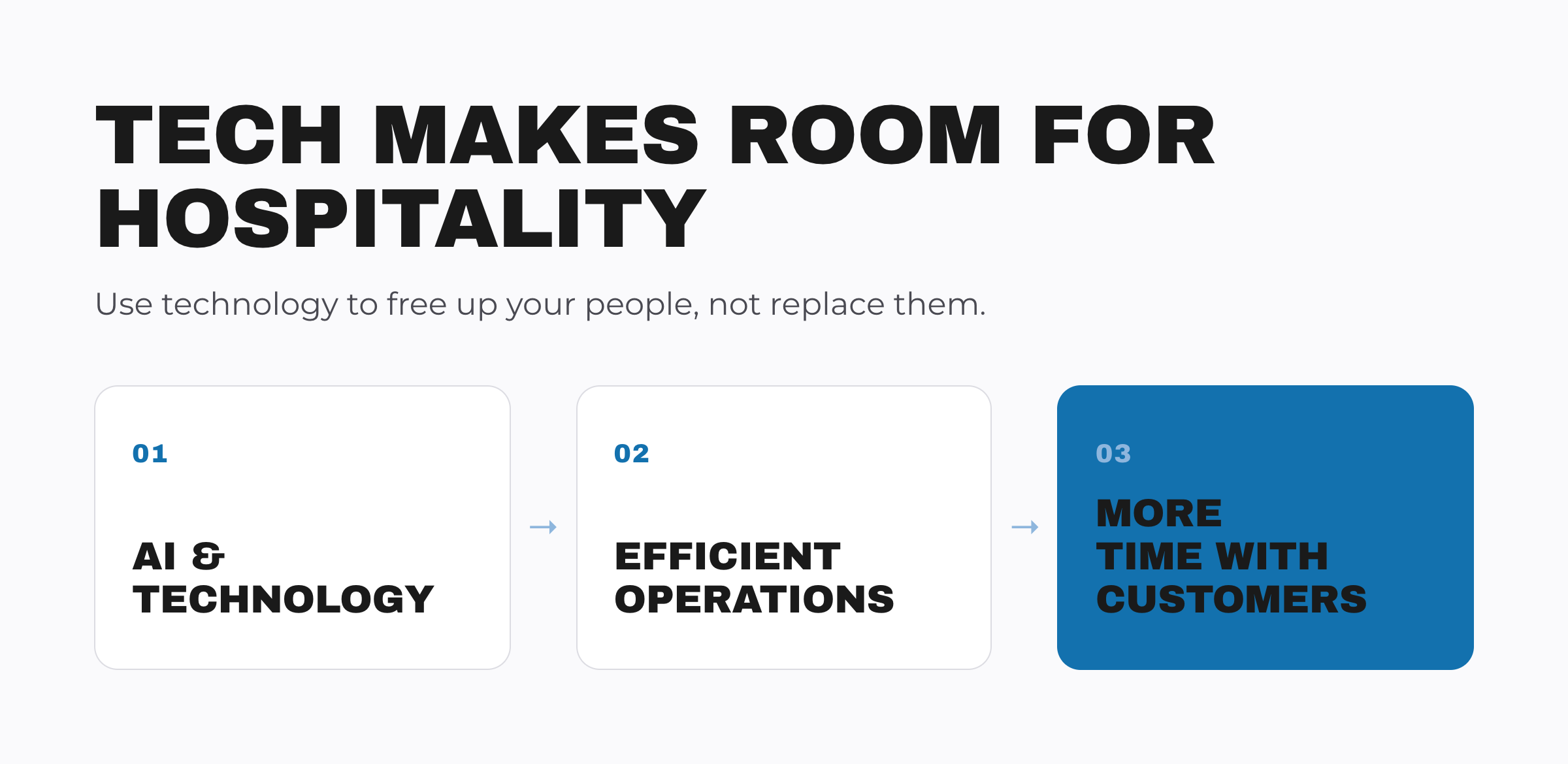
There's a lot of conversation right now about artificial intelligence and technology replacing the way businesses interact with customers. And listen, I'm a huge believer in technology. We have our own AI division, AIX, and we're using AI throughout our businesses, from the inspection process to bookkeeping and just about everything in between. It's phenomenal what technology can do. It makes things faster, more efficient, and gives us capabilities we didn't have before. But technology cannot duplicate the feeling you get when somebody genuinely takes care of you. It cannot replace hospitality.
I actually believe the more technology advances, the more important human interaction is going to become. People are missing that connection. They want to speak with somebody who listens to them, understands their concerns, and takes the time to help them.
That's one of the biggest reasons we invest in technology in the first place. We use it to make our operations more efficient so our people have more time to spend with customers. At the end of the day, people want to be treated like people. They want to be respected. They want to feel like somebody cares. And businesses that understand that are going to have an enormous advantage.
Why Better Customer Service Allows Auto Repair Shops to Charge More
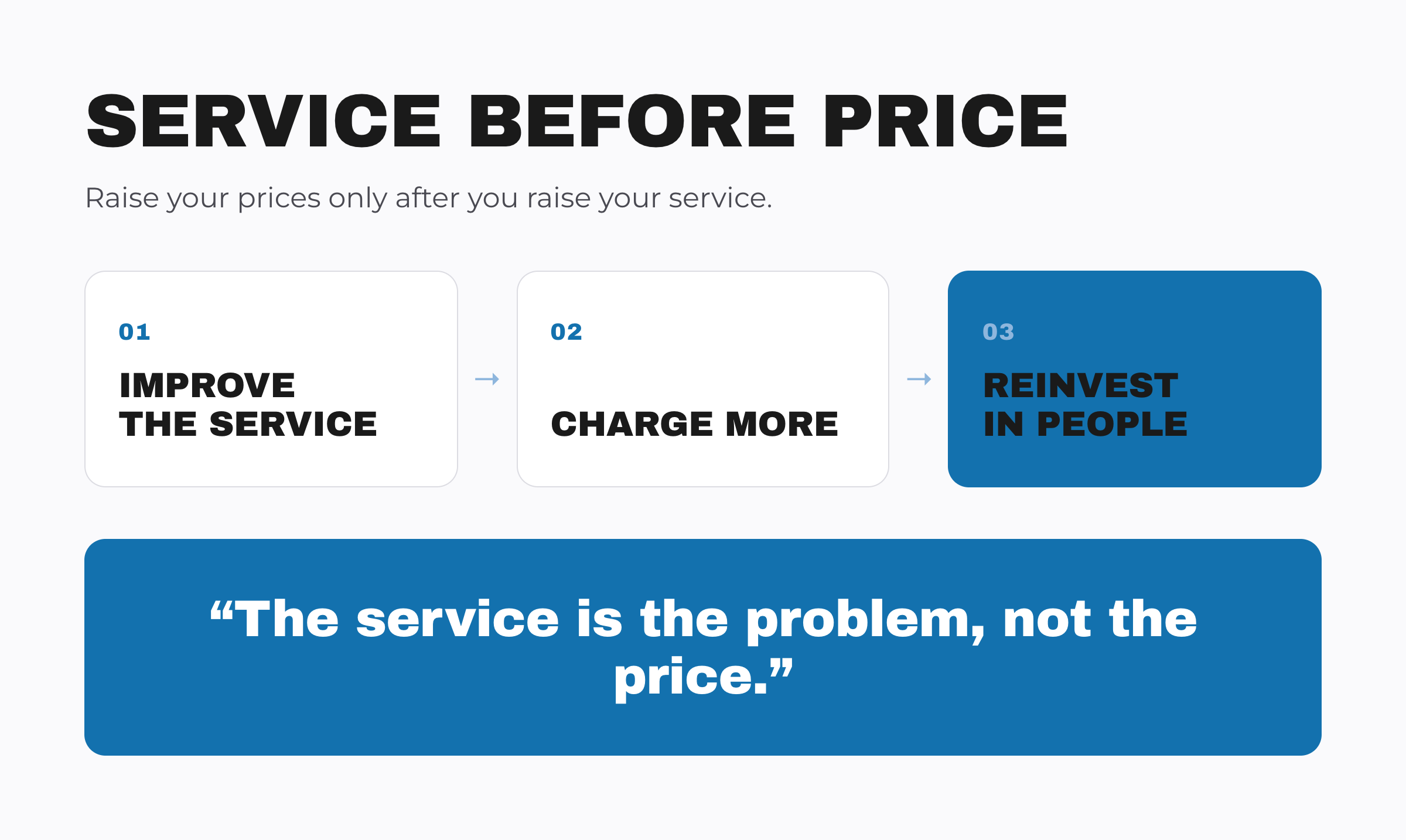
When Todd first started telling me I needed to raise my prices, I thought he was crazy. I remember thinking that if I raised my prices by $20, all my customers were going to leave. But Todd kept telling me something very important: if you're going to raise your prices, you better raise your level of service. And I agreed with that. There were times when I actually told him I couldn't raise my prices yet because our team or our processes weren't good enough. I didn't think it would be fair to the customer. But once we improved the service, I had no problem charging more.
Today, we're one of the most expensive repair shops in our area. We're more expensive than most dealerships. And we're busy every single day. Because the service is the problem, not the price. Charging more has also allowed us to do more for our employees and our customers. We're able to provide our technicians with air-conditioned shops, paid time off, retirement benefits, and a better working environment. We can offer our customers nice loaner vehicles and take care of the little things that make their lives easier.
For example, every loaner vehicle we give a customer has a full tank of gas. We ask them to bring it back full, but if somebody returns it with half a tank, we're not going to call them and ask for $30. We've made the decision that we're simply not going to do that.
It's a small thing, but those little decisions are part of the experience we're trying to create.
My advice to other business owners is to focus on improving the service instead of worrying so much about the dollars. When you provide exceptional service, take care of your customers, and build a team that believes in what you're doing, the dollars will follow.
Creating a Customer-First Culture in Your Auto Repair Shop
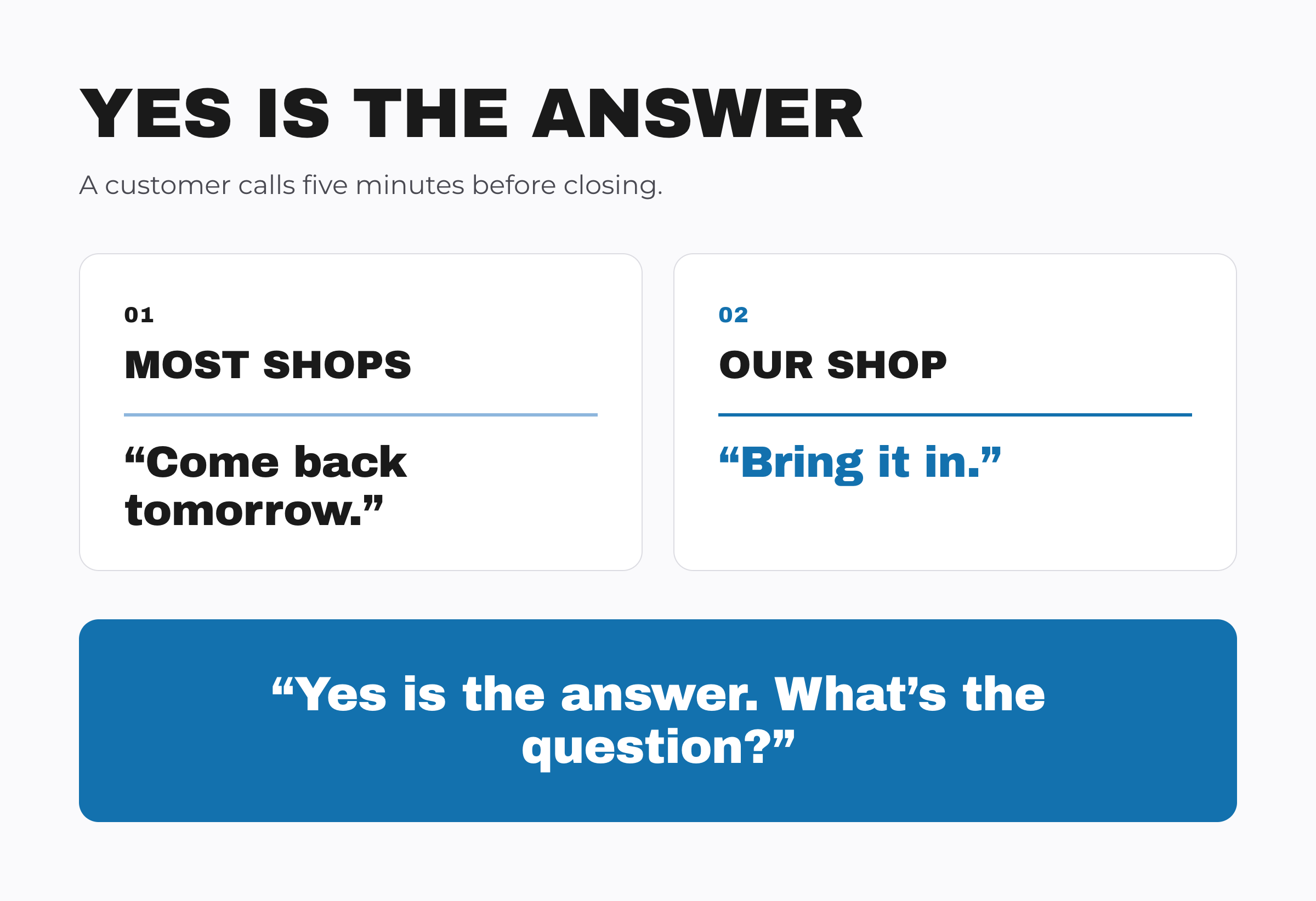
We have two big signs in our shops that say, "Yes is the answer. What's the question?" Now, those are just words on a wall until your people actually believe them. They mean nothing until saying yes becomes part of your culture. I know a lot of shop owners disagree with me on this. They tell me you can't say yes to everything. But I believe you can say yes a whole lot more often than you think.
Let's say somebody calls your shop at 5:55 in the afternoon, five minutes before closing, because something is wrong with their car. Most shops are going to tell them to come back tomorrow. We're going to tell them to bring it in. That doesn't mean we're going to fix the entire car that evening. But we can take a look at it, find out what's going on, explain the problem, help them get home, and make a plan to take care of the repair.
The customer doesn't necessarily expect the whole repair to be completed that night. They want to know somebody is paying attention to them and genuinely cares about helping them. And when you start looking at your business that way, you realize how many opportunities you have to say yes.
Of course, you have to build the right team and the right processes to make this possible. At our smaller shop, for example, we keep one lift available primarily for inspections. That allows us to bring vehicles in, identify problems, and communicate with customers without constantly interrupting our technicians who are working on larger repairs.
It takes coordination. It takes training. And it takes a team that understands exactly how the process is supposed to work.
But once you build those systems, saying yes becomes a lot easier.
Building a Successful Auto Repair Business Starts With the Right Process
I've learned a lot over the years, and I've made plenty of mistakes along the way. But one of the biggest lessons I've learned is that extraordinary customer service isn't necessarily complicated.
It comes down to doing the little things consistently:
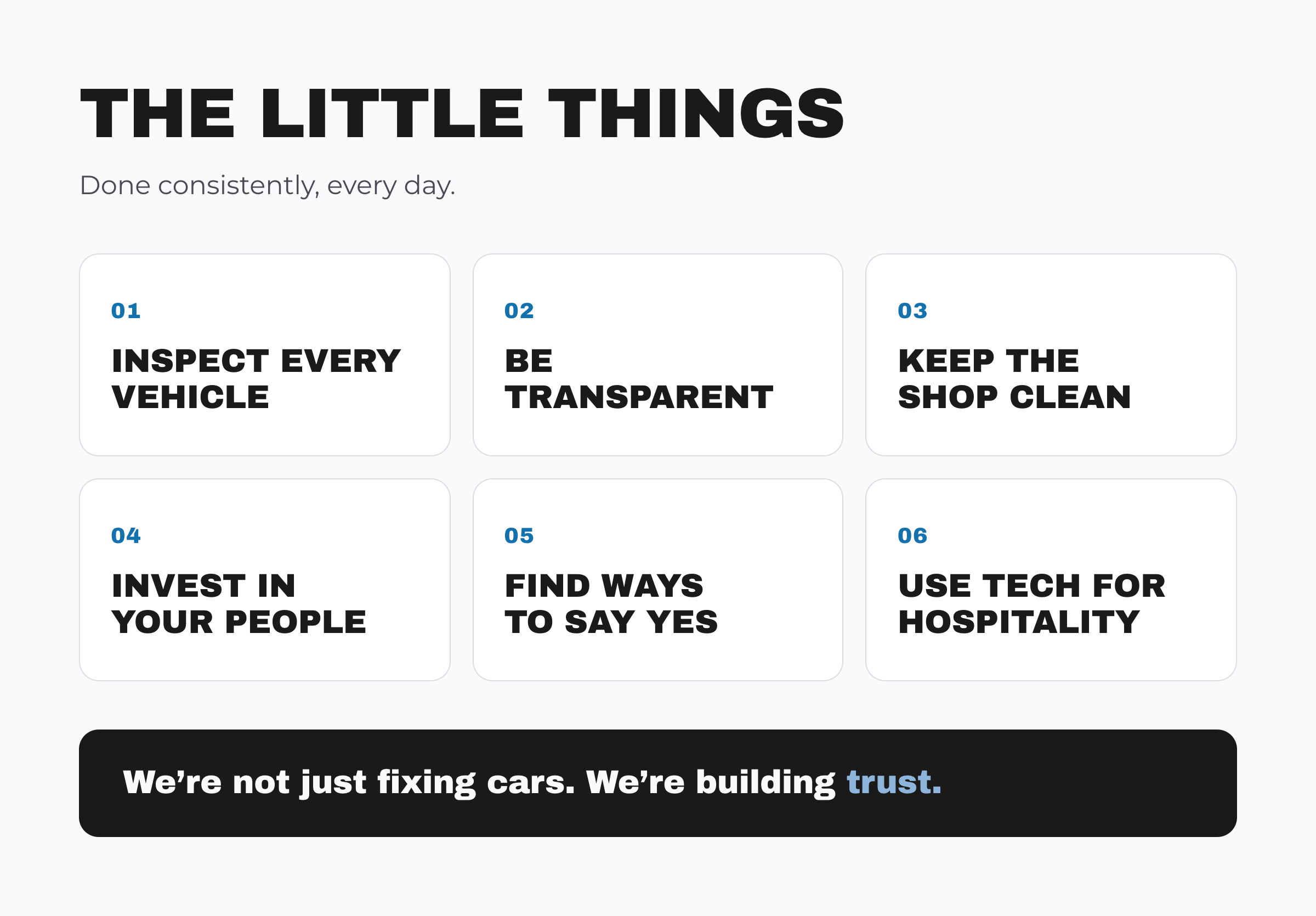
Inspect every vehicle. Take the time to understand what's going on with the entire car, not just the reason the customer brought it in.
Be transparent. Show customers what you find and help them understand their options.
Keep your shop clean and organized. The environment should reflect the level of service you're promising.
Invest in your people. Give your team the training, resources, and support they need to take care of customers.
Find ways to say yes. Build processes that make it easier to accommodate customers instead of automatically turning them away.
Use technology to create more time for hospitality. Efficiency should help your team provide a better experience, not eliminate the human connection.
None of these things are particularly difficult to understand. What's difficult is having the discipline to do them every single day, with every vehicle and every customer.
I've seen firsthand what happens when a business commits to these principles. Our original shop is only about 2,000 square feet, with four lifts, and we've been able to produce results that many much larger shops haven't achieved. But those results didn't happen overnight. They came from years of improving our processes, training our people, and building a culture around hospitality.
I used to question almost everything Todd taught me because it was so different from the way I'd learned to operate. Eventually, I realized that I didn't need to reinvent the concept. I needed to trust the process and execute it consistently.
That's when the growth really started happening.
I believe there is an enormous opportunity for auto repair shop owners who are willing to rethink the way they serve their customers. And really, these principles apply to just about any service business.
You don't have to have the biggest building or the most expensive equipment. You have to understand your customers, build the right team, and create an experience that makes people want to come back.
Because at the end of the day, we're not just fixing cars.
We're building trust.