How to Turn More Auto Shop Phone Calls Into Appointments
When I train service advisors on how to answer the phone at an auto repair shop, one of the first things I want them to understand is that the job is probably simpler than they think. A lot of advisors hear the phone ring and immediately start thinking about everything the customer could possibly ask them. How much are brakes? How much are tires? Why is my check engine light on? What is that noise? How quickly can you look at my car? Do you have the part? What if I need front brakes and rear brakes? If you try to prepare an answer for every possible question, answering the phone can start to feel overwhelming very quickly.
During a recent training, I gave the group a much easier way to think about it. I told them they really only need to learn how to answer two kinds of phone calls. Once you understand those two calls and know what questions to ask, the conversation becomes much easier to manage. Your advisor has a structure to follow, the customer gets clear direction, and you have a much better opportunity to get the vehicle into the shop where you can actually inspect it.
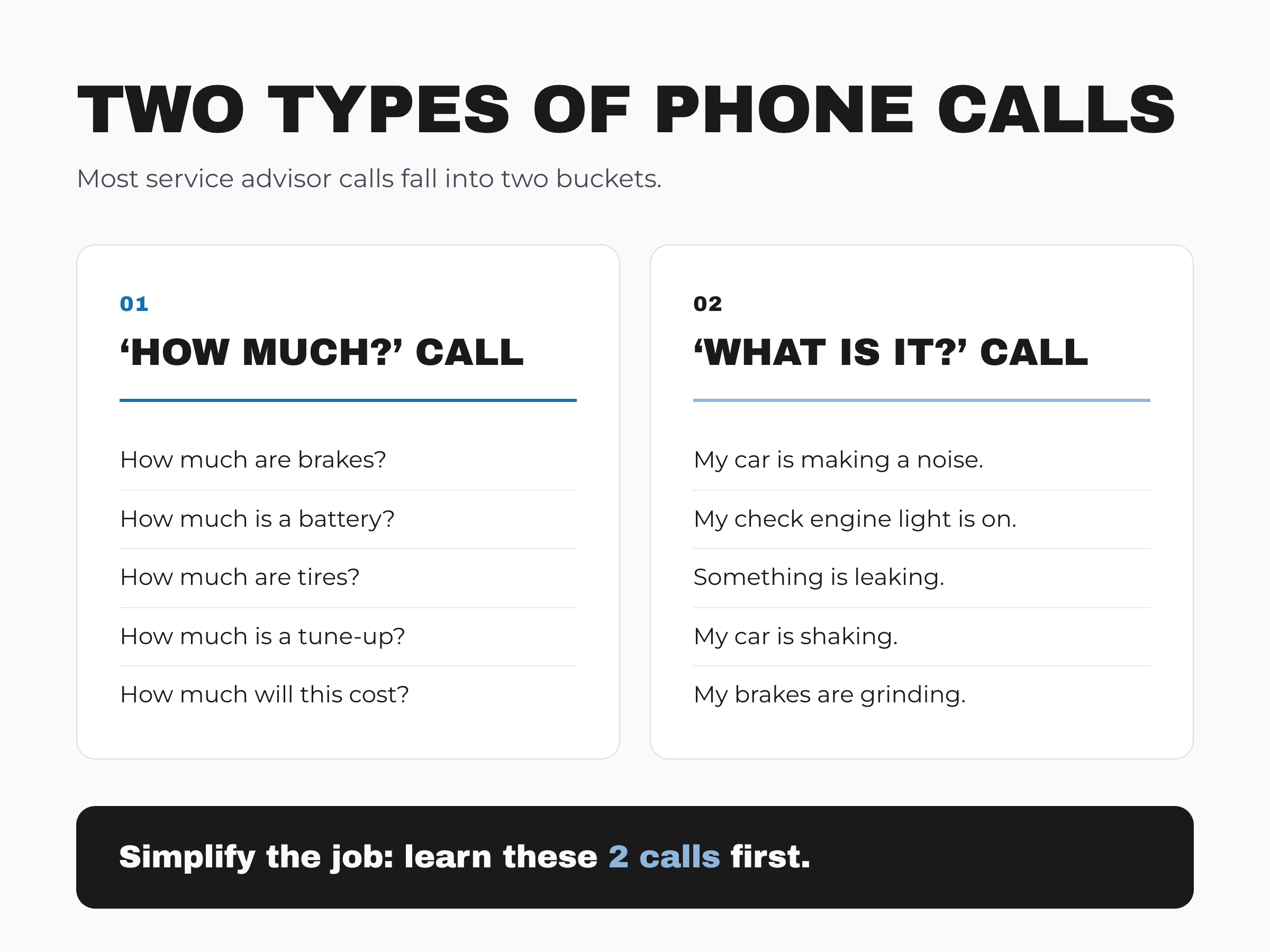
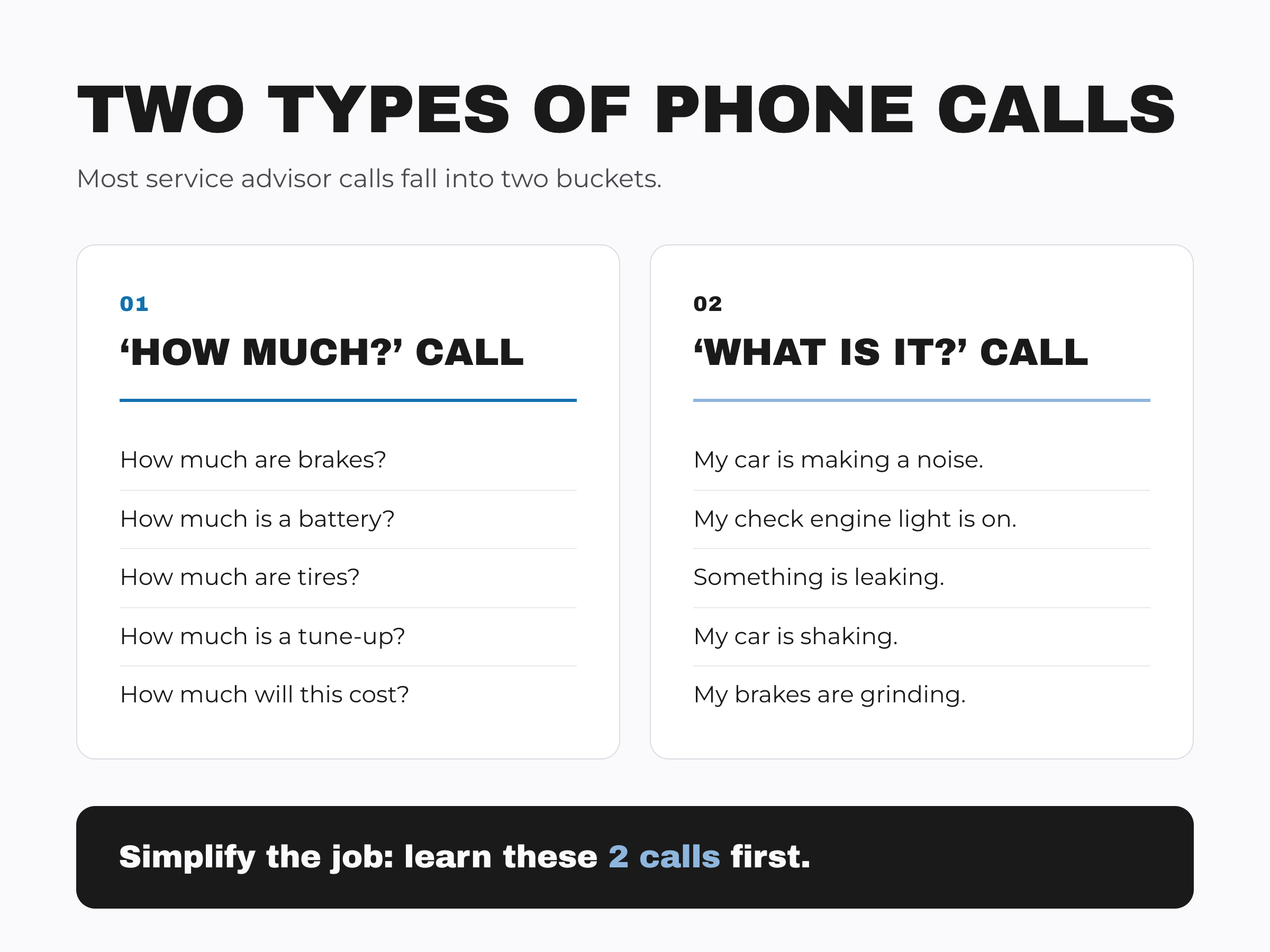
Most Auto Repair Phone Calls Fall Into Two Categories
The first type of call is what I call the “How much?” call. The customer wants a price. The details change, but the question underneath all of them is the same: how much is this going to cost me?
They might ask:
How much are brakes?
How much is a battery?
How much are tires?
How much is a tune-up?
How much is it going to cost to fix this?
The second type is the “What is it?” call. The customer has a problem with the vehicle and wants to know what is happening. Again, the details change, but your advisor is still dealing with the same basic type of conversation.
They might say:
My car is making a noise.
My check engine light came on.
Something is leaking.
My car is shaking.
My brakes are grinding.
Once your team understands that most calls are going to fall into one of those two categories, there is a lot less to memorize. You can train people on how to handle both situations, give them a few questions they know how to use, and practice those conversations until they become familiar. Instead of preparing for hundreds of possible phone calls, your team is learning how to handle two basic situations really well.
Stop Trying to Answer Every Question Over the Phone
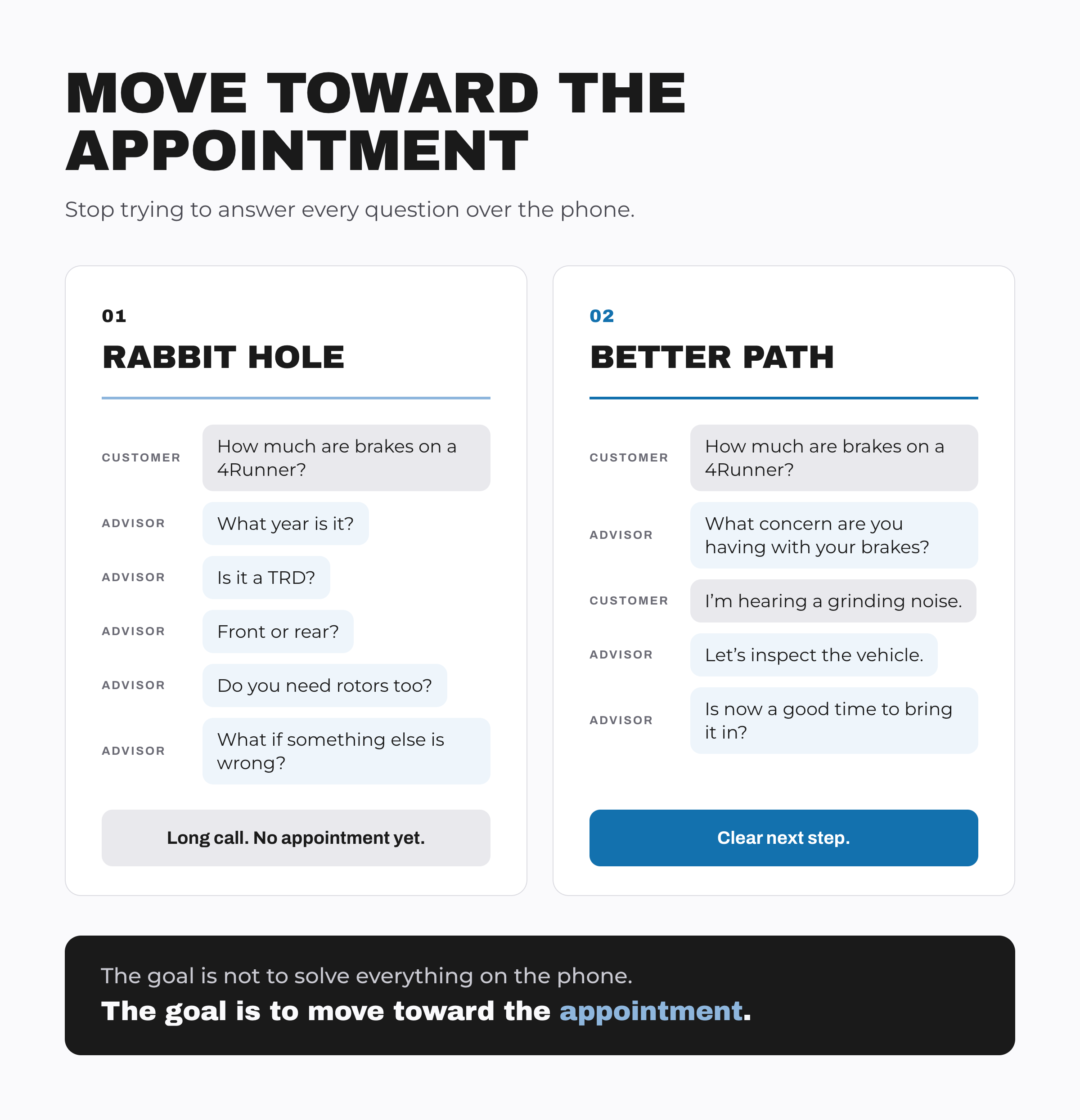
Let’s say somebody calls your shop and asks how much brakes are going to cost on a Toyota 4Runner. A lot of service advisors immediately start gathering information. They ask what year the vehicle is. Then they might ask whether it is a TRD. Then they ask whether the customer is talking about the front brakes or the rear brakes. The conversation keeps going, and every answer can create another question.
You can spend a long time on the phone trying to give somebody a precise answer when you still have not seen the vehicle. The customer might start asking how much the front brakes cost, how much the rear brakes cost, whether the rotors need to be replaced, what happens if something else is wrong, and how the price changes depending on what the technician finds. Your advisor can end up ten minutes into the conversation without getting any closer to an appointment.
I would take the conversation in another direction. If somebody asks me how much brakes cost, I might respond with, “What kind of concern are you having with your brakes?” Now the customer tells me they are hearing a grinding noise. That gives me something I can actually work with. I can explain that any time somebody is hearing a grinding noise from the brakes, the vehicle should be inspected by a qualified technician. Then I can ask, “Is now a good time to bring the vehicle in?”
In a few questions, we have moved the conversation toward the next useful step. I am not trying to diagnose the vehicle over the phone or quote every possible version of the repair. I am helping the customer understand what they should do next and giving them an opportunity to get the car in front of somebody who can actually look at it.
The Person Asking the Questions Controls the Conversation
One of the most useful phone skills we teach service advisors is to finish with a question whenever they can. The person asking the questions has a much easier time guiding the conversation, and that gives newer advisors a structure they can lean on when they do not have years of experience behind the counter.
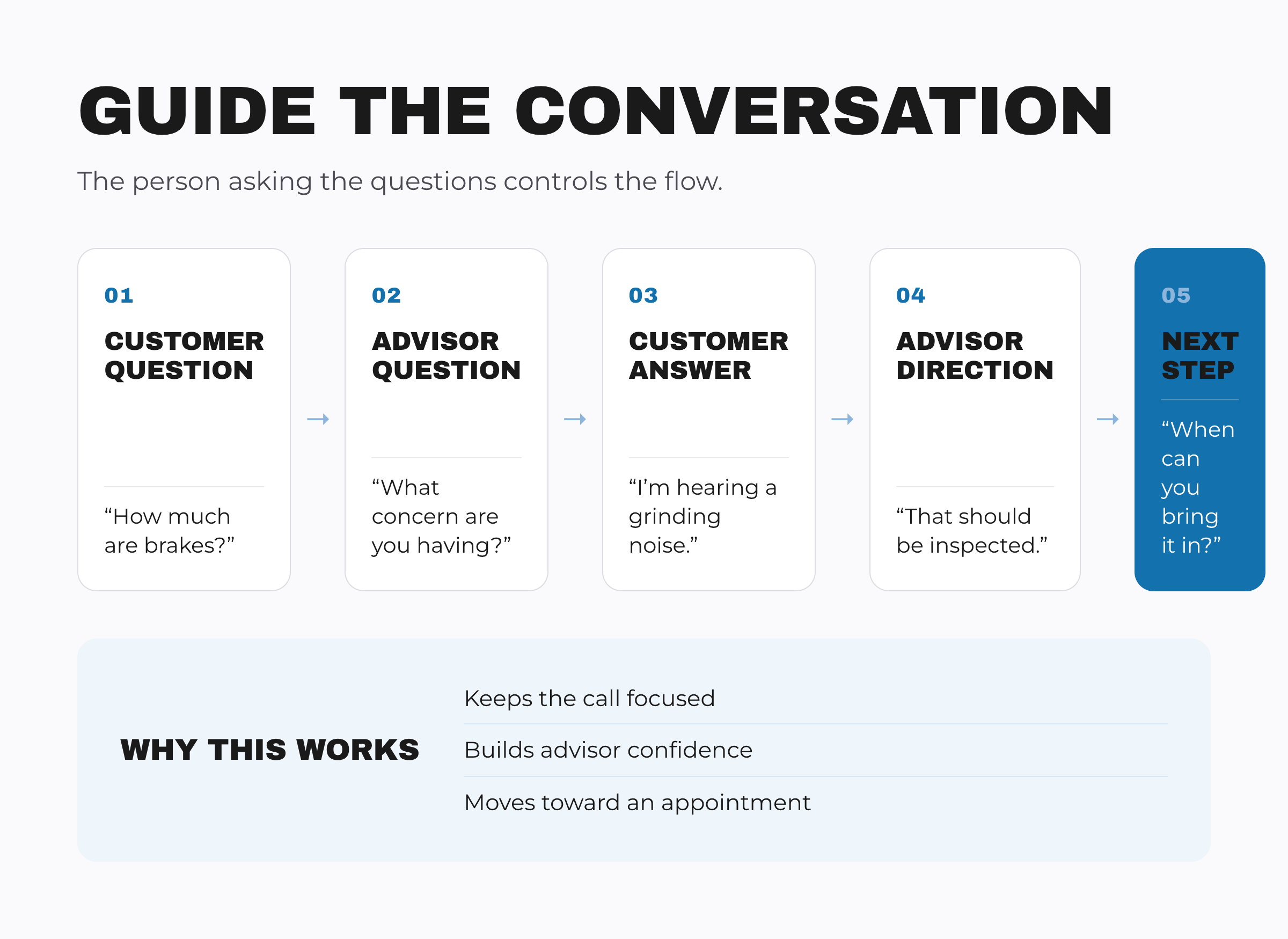
A simple flow might look like this:
The customer asks about their brakes.
You ask what concern they are having.
They tell you about the grinding noise.
You explain why the vehicle needs to be inspected.
You ask when they can bring it in.
If now does not work, you can ask what time does. The conversation keeps moving toward a clear next step.
This also helps the advisor avoid getting pulled into a long series of questions they cannot answer accurately yet. If you simply answer everything the customer asks and wait for the next question, you can end up following the conversation wherever the customer takes it. When your advisor knows what they are trying to accomplish and knows which questions can move the conversation forward, they can stay focused without making the interaction feel forced.
Your Goal Is to Get the Vehicle Into the Shop
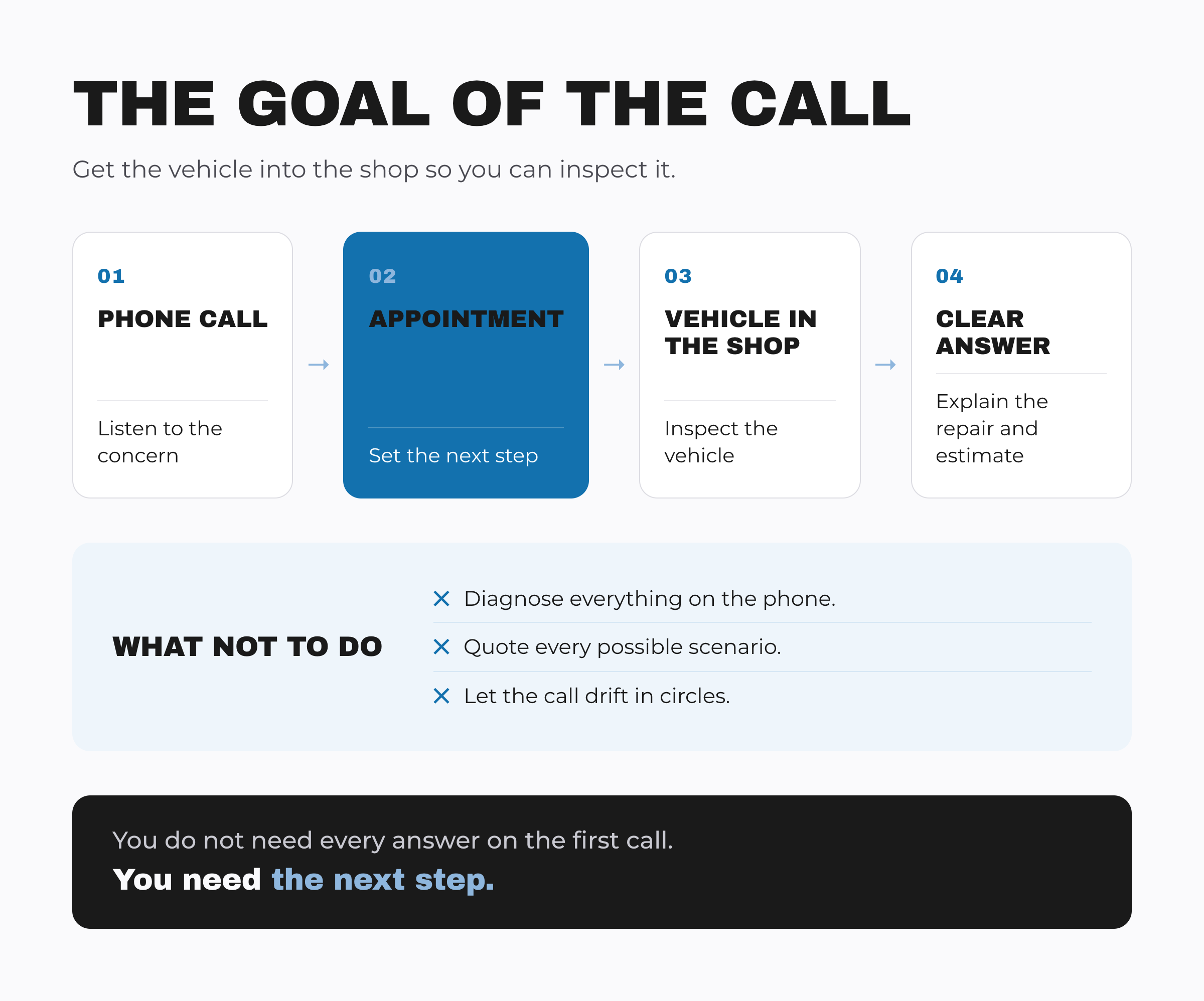
There are plenty of questions a customer can ask that are difficult to answer without seeing the vehicle. Your service advisor does not need to solve the entire problem during the first phone call. Their job is to understand the customer’s concern, explain the appropriate next step, and make it easy for that person to bring the vehicle in.
Once the car is in the shop, your technicians can inspect it and give the customer real information about what is happening. That is where you can have a useful conversation about what needs to be repaired, what it is going to cost, and what options the customer has.
A good phone process helps your advisors stop treating every call like a test where they are expected to know the answer to everything. They do not need every answer. They need to know:
What to listen for
What question to ask next
When to stop trying to diagnose over the phone
How to guide the customer toward an appointment
What the next step should be
That gives your team something much more useful than trying to memorize answers to every possible customer question.
Auto Repair Phone Scripts Can Make Your Team’s Job Easier
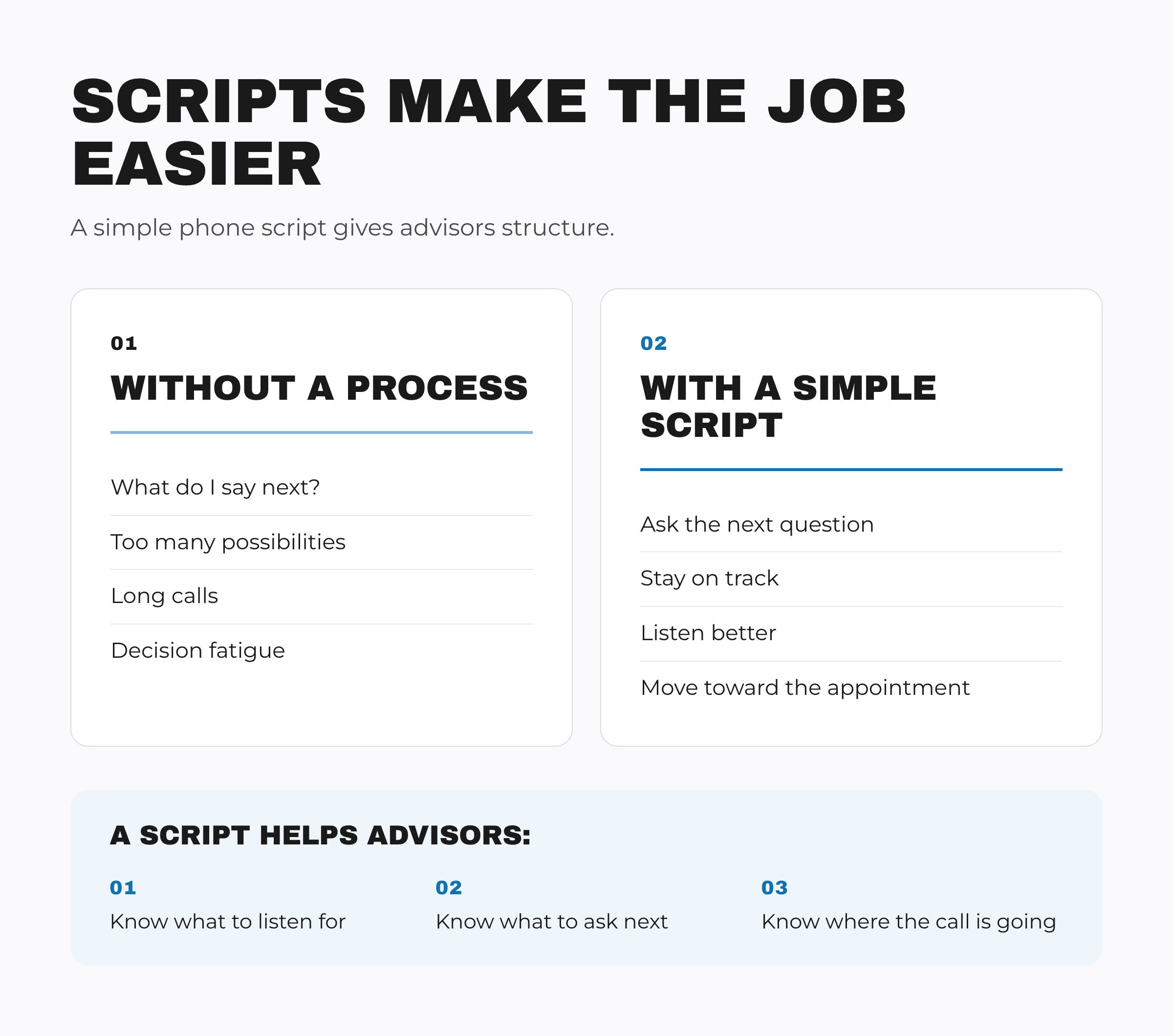
Some shop owners hear the word “script” and immediately worry that their employees are going to sound robotic. That is not how I want scripts used. I am not telling an advisor to hold a piece of paper in front of them and read every word to the customer.
The script gives them a structure. It shows them how the conversation should move and gives them language they can refer back to until it becomes comfortable. Once they understand the structure, they can use their own voice and have a natural conversation with the customer.
This can also take a lot of decision-making off your team throughout the day. Think about how many times the phone rings in a busy auto repair shop. If an advisor has to invent a new response every time, they are constantly trying to decide what to say next while also dealing with customers in the shop, technicians asking questions, estimates, parts, and everything else happening around them.
When they know the process, they know what they are listening for. They know which questions to ask. They know where they are trying to take the conversation. That gives them more room to actually listen to the customer and less reason to feel like they have to come up with the perfect answer on the spot.
Practice Your Phone Scripts Before the Customer Calls
This is where role play becomes incredibly useful. During our training, we had people come up in front of the group and practice these conversations live. In the beginning, nobody really wanted to do it. You have a room full of people watching, somebody recording, and now you have to pretend you are on the phone with a customer. There is pressure there.
After we had been doing it for a while, something changed. People started volunteering to come up. They had watched somebody struggle through a conversation, get a little coaching, try it again, and improve dramatically within a couple of minutes. Once people saw how quickly they could get better, they wanted another chance to practice.
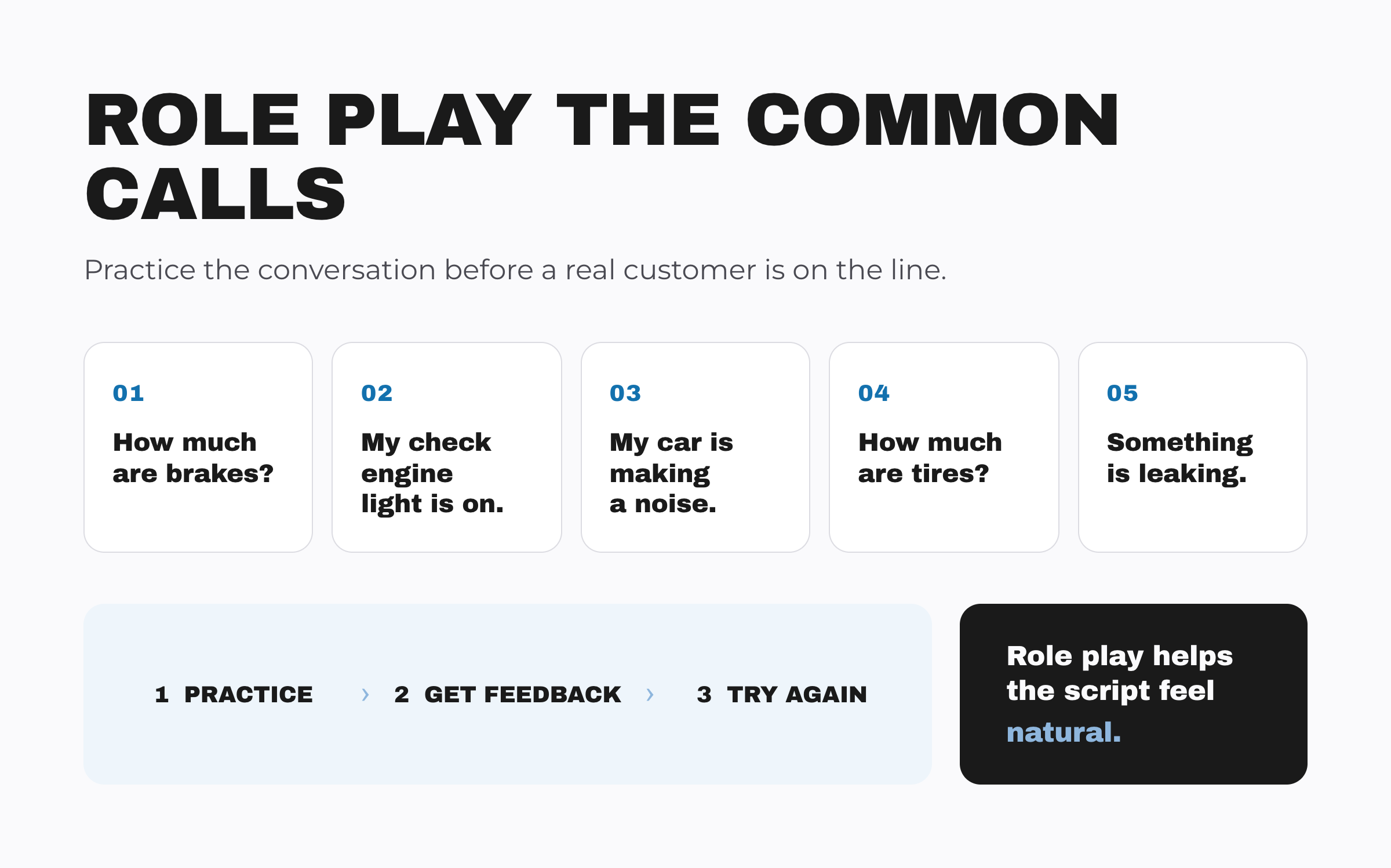
You do not need a stage or 50 people in a training room to do this in your shop. Take two people, give them a common phone scenario, and have them practice it together.
Try scenarios like:
A customer asking how much brakes cost
Somebody calling about a check engine light
A customer hearing a strange noise
Somebody asking about tires
A customer who wants a price before bringing the vehicle in
Someone who keeps asking follow-up questions
One person plays the customer and the other person guides the conversation. Then switch roles. The goal is to give your team a chance to hear themselves say the words before there is a real customer on the other end of the phone. They can make mistakes, get feedback, and try it again without anything being on the line.
Practice Until the Conversation Feels Natural
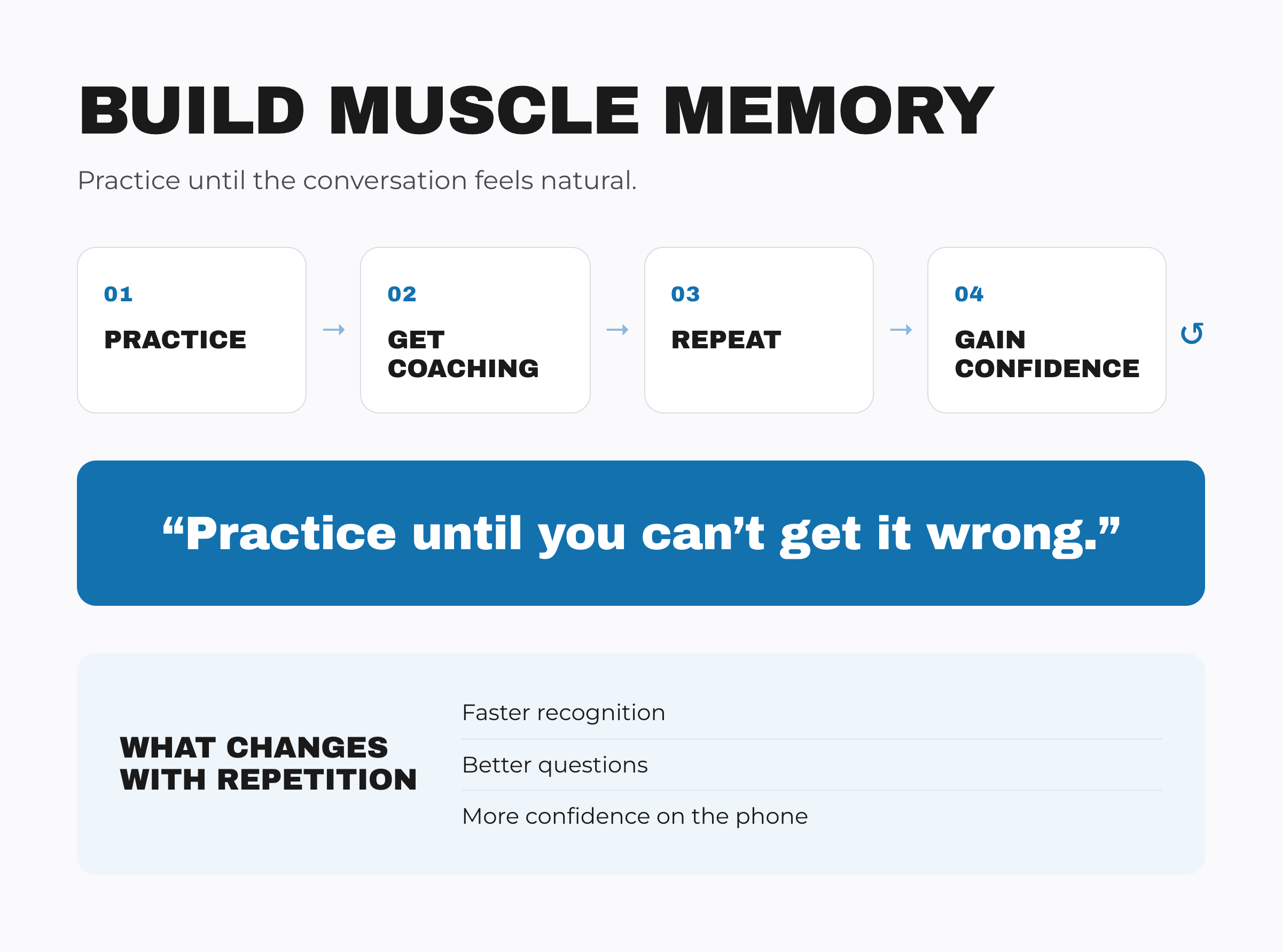
There is a saying I heard from Glenn down in Houston that I use when I talk about role play: “Amateurs do it until they get it right. Professionals do it until they can’t get it wrong.”
That is really what we are trying to create. If you look at somebody who has practiced martial arts for years, they have repeated the same movements so many times that they do not have to stop and think through every step. Their body already knows what to do.
You can create a similar kind of muscle memory with customer conversations. When your advisors have practiced the same phone scenarios over and over, they start recognizing what kind of call they are on very quickly. They know what question to ask. They know what information actually matters. They know how to move the conversation toward an appointment.
That does not make the conversation less authentic. It usually gives the advisor more room to be themselves. They are not spending all of their energy trying to figure out what to say next, so they can listen, respond, and talk to the customer like a normal person.
Give Your Service Advisors a Phone Process They Can Actually Use
If your service advisors feel overwhelmed every time the phone rings, giving them more information to memorize probably is not going to make the job easier. Simplify the process first.
Teach them the two basic types of calls they are likely to receive. Show them how to ask questions that keep the conversation moving. Give them a structure they can fall back on when they are unsure what to say. Then practice those conversations often enough that the structure becomes familiar.
Your team does not need to know the answer to every possible question before they pick up the phone. They need to know how to handle the conversation in front of them, understand what the customer needs, and guide that person toward the next step.
When they can do that confidently, the phone becomes a lot easier to manage and your shop has more opportunities to turn incoming calls into appointments on the schedule.